
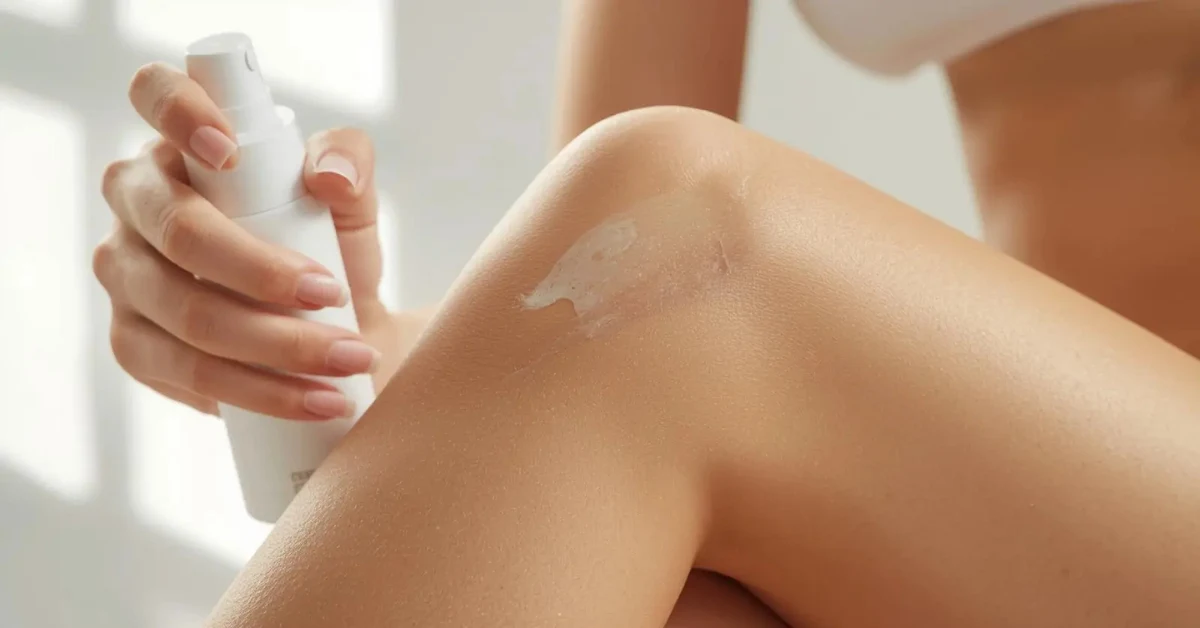
Hair removal spray is an aerosol chemical depilatory that dissolves body hair slightly beneath the epidermal surface within four to eight minutes. It delivers smooth skin without shaving nicks or razor bumps, serving as a practical at-home hair removal spray for arms, legs, and coarse body hair.
Getting smooth skin without shaving often feels like an impossible compromise between painful waxing appointments, dull razor blades, and expensive salon visits. Many people turn to hair removal spray as a convenient, painless hair removal spray alternative.
Using an alkaline aerosol requires a clear understanding of how the active chemistry interacts with human skin. The chemical process breaks down structural protein bonds, meaning strict timing, proper technique, and realistic expectations dictate whether you get clean results or painful contact irritation.
This breakdown examines how the product functions, compares it directly against traditional grooming tools, evaluates coarse hair performance, and details the exact safety rules you need to follow.
How Does Hair Removal Spray Work

Hair removal spray works by using alkaline depilatory agents like potassium thioglycolate or calcium thioglycolate to break the disulfide bonds in hair keratin. Once the protein bonds dissolve, the hair strand turns into a soft gel and wipes away cleanly from the follicular opening.
Human hair consists of keratin, a fibrous structural protein stabilized by cross-linked cysteine bonds. Standard bath water and body soaps cannot dissolve these stubborn sulfur bonds.
A fast-acting hair removal spray pairs thioglycolate salts with an alkaline base such as calcium hydroxide or sodium hydroxide. This combination raises the pH on your skin surface to roughly 11 or 12.
At this high pH level, the hair shaft swells open. The active depilatory agents penetrate the internal cortex, sever the disulfide bonds, and destroy the structural integrity of the strand.
Within minutes, the hair collapses completely. When you wipe the treated skin with a damp washcloth, the dissolved strands slide off cleanly.
Because the chemical action dissolves the strand slightly below the surface of the skin, regrowth emerges with a natural, tapered tip rather than the blunt, prickly edge produced by a razor blade.
Hair Removal Spray vs Shaving for Smooth Skin
Hair removal spray dissolves hair just below the skin surface, lasting three to seven days without razor bumps. Shaving slices the hair bluntly at the surface, creating sharp stubble within two days. Waxing extracts the hair root entirely, lasting up to four weeks with higher pain.
| Method | Treatment Depth | Days Until Regrowth | Pain Level | Primary Trade-Offs |
| Hair Removal Spray | Sub-surface follicle opening | 3 to 7 days | Painless to mild warmth | Chemical odor, chemical burn risk, bathroom overspray |
| Manual Shaving | Epidermal surface | 1 to 3 days | None if technique is good | Razor bumps, nicks, fast stubble |
| Depilatory Cream | Sub-surface follicle opening | 3 to 7 days | Painless to mild warmth | Heavy mess, slow manual spreading |
| Waxing | Full root bulb | 2 to 4 weeks | High | Folliculitis, skin lifting, high salon cost |
| Epilator | Mechanical root pluck | 2 to 3 weeks | High | Ingrown hairs, slow treatment time |
| Laser Hair Removal | Follicle thermal destruction | Semi-permanent | Moderate heat snaps | High financial cost, requires multiple sessions |
Hair Removal Spray Pros and Cons
Hair removal sprays offer a blade-free method to clear large body zones quickly without razor bumps or scratchy regrowth. While the aerosol application is convenient, the formula introduces trade-offs like chemical odors, mandatory patch testing, and strict timing windows to prevent skin burns.
- Pros
- Delivers smooth skin without razor cuts, bleeding, or nicks
- Prevents razor bumps and strawberry legs caused by friction
- Regrowth emerges with a soft, tapered tip rather than stiff stubble
- Covers wide areas like legs and back in under a minute
- Cons
- Carries a risk of chemical burns if left on past the timer
- Releases a noticeable sulfur scent during the active chemical breakdown
- Requires a mandatory 24-hour patch test before full use
Manual Shaving Pros and Cons
Manual shaving offers an instant, low-cost grooming routine that does not rely on harsh chemicals or wait times. The mechanical blade action works on skin that cannot tolerate depilatories, but frequent blade contact strips moisture and increases the likelihood of ingrown hairs.
- Pros
- Inexpensive upfront cost with blades and razors available everywhere
- Delivers immediate results with zero waiting time required on the skin
- Works reliably on reactive skin that cannot tolerate chemical formulas
- Cons
- Regrowth appears within 24 to 48 hours as blunt, scratchy stubble
- Frequent risk of razor burn, accidental cuts, and infected follicles
- Steel blade friction strips away natural surface lipids from dry skin
The Least Painful Hair Removal Method
Hair removal spray is widely considered the least painful hair removal method because it works through topical chemical dissolution rather than mechanical pulling. Unlike hot wax strips or mechanical epilators that rip follicles from the root bulb, depilatories produce zero physical pulling sensations when applied correctly.
Users generally feel only a gentle warming sensation while the active thioglycolate salts soften the hair fibers. This makes an at-home hair removal spray an effective option for people with low pain tolerance who still want longer-lasting results than daily razor shaving provides.
Common Hair Removal Spray Side Effects and Frequency
The most common hair removal spray side effects are mild skin redness, a slight warming sensation, and a residual sulfur odor. More severe reactions like chemical burns, blistering, and contact dermatitis happen primarily from overexposure or skipping safety precautions.
| Side Effect | Observed Frequency | Root Cause | Management Strategy |
| Mild Redness or Warmth | Very Common | Natural reaction to alkaline pH shifts | Rinse with cold water and moisturize |
| Tingling Sensation | Common | Chemical agents dissolving keratin bonds | Monitor closely for sudden burning |
| Persistent Sulfur Odor | Common | Volatile organic sulfur released from broken hair | Run bathroom exhaust fans during use |
| Sharp Stinging or Burning | Less Common | Product left on past the safe time limit | Wash off immediately with cold water |
| Blistering or Hives | Rare | Allergic reaction or broken skin barrier | Discontinue use and apply bland ointments |
Is Hair Removal Spray Safe
Hair removal spray is safe for healthy skin when used strictly according to label instructions. The active depilatory chemicals do not distinguish between the keratin in hair and the keratin in skin, so leaving the spray on too long causes chemical burns, redness, and acute contact dermatitis.
The primary safety concern with any at-home hair removal spray is contact time. The same alkaline reaction that softens hair will degrade the protective stratum corneum of your skin if you ignore the clock. Following standard hair removal spray precautions protects your skin barrier from preventable damage.
Who Should Not Use Hair Removal Spray
Certain skin profiles and medical conditions make chemical depilatories hazardous to the epidermal barrier. People with compromised skin, active flare-ups, or heightened chemical sensitivities should avoid using aerosol depilatories to prevent severe contact dermatitis or systemic absorption through broken tissue.
- Anyone with active eczema, psoriasis, open wounds, or abrasions in the target area
- Individuals who have shaved or chemically exfoliated the skin within the last 48 hours
- Anyone with sunburned or peeling skin
- People with known contact allergies to sulfur compounds or thioglycolate salts
- Anyone currently using topical retinoids or taking prescription oral acne medications
The Patch Test for Hair Removal Spray

A patch test is a required safety check performed 24 hours before applying depilatory chemicals over larger body areas. Testing a small, quarter-sized patch of skin confirms whether your skin barrier can tolerate the high alkaline pH without developing hives, burning, or allergic dermatitis.
Spray a small circle onto your lower leg or inner forearm. Leave it on for four minutes, rinse it thoroughly with cool water, and wait a full 24 hours. If the test area shows any redness, hives, swelling, or persistent itching, do not proceed with a full application.
How to Use Hair Removal Spray Safely

Using hair removal spray safely requires an even application on clean, dry skin, strict clock monitoring, and removal with cool water. Never rub the spray into the skin, and never leave any chemical depilatory on for more than ten minutes.
- Clean the target skin with a gentle wash and pat it completely dry. Avoid hot showers or abrasive loofahs beforehand because micro-tears increase chemical absorption.
- Shake the aerosol canister vigorously for ten seconds to distribute the active ingredients in hair removal spray evenly.
- Hold the spray nozzle four to six inches away from your skin. Apply a continuous, visible layer over the hair without rubbing the liquid into your pores.
- Set a timer for four minutes. Do not guess how much time has passed.
- Take a damp, textured cotton cloth and wipe a small test section. If the hair wipes away without resistance, remove the rest using steady downward strokes. If hair resists, leave the spray on for two additional minutes.
- Flush the entire treated area thoroughly under cool running water until all slick chemical residue disappears.
- Gently pat the skin dry with a clean towel. Apply a fragrance-free ceramide moisturizer or pure aloe vera gel to calm the skin.
Best Hair Removal Spray for Sensitive Skin at Home
The best hair removal spray for sensitive skin uses lower concentrations of thioglycolate salts balanced with skin-soothing ingredients like aloe vera, chamomile, and urea. These milder formulations dissolve hair gently while maintaining skin barrier integrity to prevent irritation.
Finding convenient hair removal methods for sensitive skin requires careful label inspection. Aggressive, extra-strength formulas designed to dissolve dense hair will strip reactive skin barriers within minutes.
- Look for formulas featuring potassium thioglycolate rather than harsh calcium thioglycolate, paired with soothing agents like bisabolol, allantoin, or colloidal oatmeal.
- Choose unscented or low-fragrance options. Heavy perfumes are the leading cause of allergic flare-ups on allergy-prone skin.
- Follow strict timing controls. Sensitive skin should always stick to the shortest recommended duration, typically four to five minutes maximum.
- Skip chemical aftershaves, physical body scrubs, and alpha hydroxy acids for at least 48 hours after treatment.
Does Hair Removal Spray Work on Coarse Hair
Hair removal spray works on coarse body hair, but standard formulas often leave patchy, rough stubble behind. Dense hair shafts require specialized formulations labeled for coarse hair, alongside contact times pushed to seven or eight minutes to fully break internal disulfide bonds.
Terminal body hair found on the chest, back, and underarms contains a thick internal cortex protected by dense, overlapping cuticle scales. Standard formulas designed for fine arm or leg hair often dissolve only the outer surface of coarse hair shafts, leaving the thick base attached to the skin.
For individuals seeking easy hair removal for coarse hair, select products explicitly labeled as extra strength or formulated for thick hair textures. Allow the product to sit for six to eight minutes, checking a test spot at the six-minute mark.
If coarse patches remain after you rinse the product away, never reapply the spray immediately. The underlying skin is already sensitized, and applying a second chemical layer will cause severe chemical burns. Wait at least 72 hours before attempting another session on that same spot.
Area-Specific Grooming: Legs, Arms, and Bikini Area
Hair removal spray for legs and arms covers wide areas quickly, but using hair removal spray for bikini area grooming presents significant chemical burn hazards. Always match your application technique to the sensitivity of the anatomical zone you are treating.
Hair Removal Spray for Legs and Arms
Legs and arms feature durable skin and relatively flat surfaces, making them the easiest areas to treat with an aerosol depilatory. The primary issue here is bathroom overspray.
Aerosol droplets settle on smooth tile floors, making them slick and dangerous. Always stand inside an empty shower stall or place a large towel down before spraying your limbs.
Hair Removal Spray for Bikini Area
Using an aerosol depilatory around the bikini zone requires caution. Never spray an aerosol depilatory directly onto the groin. Aerosol mists disperse widely, risking chemical contact with delicate mucous membranes and perianal tissues, which can cause severe blistering.
If using a depilatory around the bikini line, spray the product into your hand first or choose a targeted depilatory cream with an applicator wand. Apply it strictly to the outer pelvic area, well away from sensitive internal folds, and keep contact time under five minutes.
What Is the Best Hair Removal Spray for Beginners
The best hair removal spray for beginners is a gentle, sensitive-skin aerosol formula with a short four-to-six-minute activation window and clear application guidelines. Beginners should prioritize skin safety and irritation control over rapid processing speed.
New users often make predictable errors, such as leaving the spray on too long to chase stubborn hairs, rubbing the liquid deep into their pores, or skipping the patch test. The safest hair removal spray for beginners provides a lower concentration of active depilatory salts, lowering the risk of chemical burns if the timer runs slightly over.
Beginners should always treat their lower legs first. The skin on the shin and calf is resilient, providing a safe testing ground to learn how your skin reacts to the chemistry before moving to more sensitive body areas.
How Often Can You Use Hair Removal Spray Safely
You can safely use hair removal spray once every five to seven days on the same body zone. Applying depilatory sprays more frequently than every 72 hours strips the natural lipid barrier of the skin, resulting in chronic dryness, stinging, and contact irritation.
Proper aftercare ensures your skin barrier repairs itself quickly after an alkaline chemical treatment. Avoid direct sun exposure for 24 hours because the chemical process removes the top layer of dead skin cells alongside the hair, leaving fresh skin vulnerable to UV damage. Always apply sunscreen if you head outside.
Skip tight, synthetic gym clothes immediately after treatment. Compression fabrics trap sweat against open follicles, causing bacterial folliculitis and friction bumps. Stick to loose cotton fabrics, avoid hot saunas or chlorinated pools, and hydrate the skin barrier with plain, fragrance-free lotions containing ceramides or glycerin.
Managing Chemical Depilatories for Stubble-Free Skin

Hair removal sprays deliver a functional middle path between the constant maintenance of razor shaving and the discomfort of root-pulling waxing techniques. They save time across large body zones, prevent the sharp, prickly regrowth common to steel blades, and keep you free of painful razor bumps.
Success with chemical depilatories always comes down to respect for the formulation. Treating the spray like a simple body wash will lead to chemical burns, inflamed pores, and damaged skin barriers. Running your patch tests, keeping a watchful eye on the clock, rinsing thoroughly with cold water, and giving your skin adequate recovery time between sessions guarantees clean, stubble-free results every time.