
The best orthopedic mattress relieves back pain by maintaining neutral spinal alignment, distributing body weight evenly, and preventing excessive pelvic sinkage. Combining high-density support cores with targeted lumbar zoning cushions pressure points at the hips and shoulders while keeping vertebrae properly decompressed throughout sleep cycles.
Waking up with persistent lower back stiffness, radiating sciatic tension, or shoulder soreness usually points to an unsupportive sleeping surface. Standard mattresses often sag beneath the heavier pelvic region, bending the spine out of neutral alignment and straining lumbar ligaments through the night.
Investing in a dedicated orthopedic mattress for back pain stabilizes spinal biomechanics, allowing deep muscular relaxation and reducing the morning aches that degrade daily productivity.
The following analysis details how musculoskeletal mattress engineering functions, compares core material technologies, and outlines how to select the right firmness for your sleeping posture.
What Is an Orthopedic Mattress
An orthopedic mattress is a medically influenced sleep surface designed to support the musculoskeletal system, improve spinal alignment, and relieve joint tension. It utilizes high-density base foams or zoned pocket springs to counteract pelvic sagging and maintain neutral posture for back and side sleepers.
The term originated from orthopedic medicine, which focuses on correcting disorders of the spine, joints, and skeletal system. Mattress manufacturers adapted the terminology to distinguish structurally reinforced beds from ordinary plush mattresses that offer little underlying resistance.
In particular, a genuine orthopedic bed focuses on targeted spinal ergonomics rather than surface softness.
While conventional beds allow the body to sink into an unnatural hammock shape, an orthopedic mattress bed delivers active upward pushback. This foundational counter-pressure keeps the thoracic and lumbar spine aligned, relieving pressure across vulnerable spinal discs and allowing surrounding back muscles to recover without guarding against postural drop.
How an Orthopedic Mattress Relieves Chronic Back Pain
An orthopedic mattress relieves chronic back pain by dispersing localized pressure, supporting the natural lumbar curvature, and minimizing painful micro-movements during the night. By keeping the pelvis elevated and level with the shoulders, the mattress stops mechanical shearing forces across sensitive lumbar discs.
When a sleeping surface is too soft, the hips sink unevenly, bending the lower vertebrae out of their natural inward arch. Over eight hours, this postural distortion pinches nerve pathways, strains stabilizing muscles, and worsens symptoms for people suffering from lumbar disc herniations or sciatica.
Conversely, an overly rigid mattress forces the shoulders and hips to bear concentrated body weight, creating severe pressure hotspots.
A properly engineered supportive mattress for pain relief provides a balanced contouring layer over a rigid support base. Consequently, body weight distributes across a broader surface area, which improves capillary circulation, reduces restless tossing and turning, and minimizes mechanical strain across vulnerable sacroiliac joints.
Orthopedic Mattress Core Materials and Construction
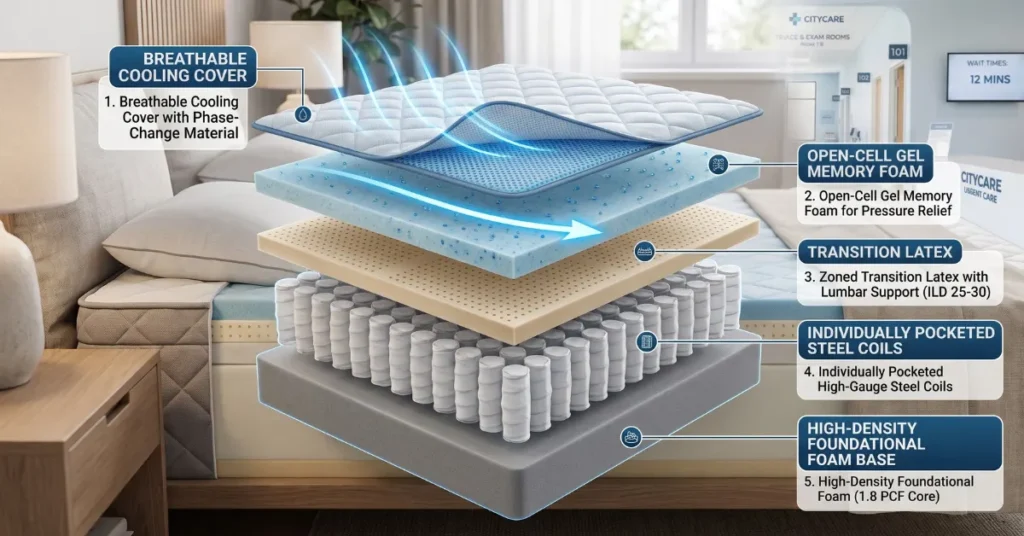
The construction of an orthopedic mattress relies on three primary internal builds, which include high-density memory foam, pocket spring arrays, and responsive hybrid designs. Each material format balances body contouring, heat dissipation, and progressive pushback differently depending on individual skeletal needs.
Understanding what sits beneath the quilted mattress cover is critical for selecting a durable sleep system. Different foam formulations and steel spring configurations alter how the mattress responds to human body weight and spinal curvature.
Memory Foam Orthopedic Mattresses
A memory foam orthopedic mattress uses visco-elastic foam cells that soften in response to body heat and direct pressure, molding closely to physical contours. This progressive contouring makes visco-elastic layers an exceptional choice for relieving painful pressure points along sensitive hips and shoulders.
Because dense visco-elastic foam absorbs body weight uniformly, it eliminates localized tension along sensitive skeletal joints. Therefore, individuals managing severe hip arthritis or shoulder bursitis experience rapid relief from contact pressure.
In addition, open-cell memory foam delivers excellent motion isolation, which prevents movement from transferring across the bed when a partner changes sleeping positions.
However, traditional memory foam tends to retain body heat throughout warmer sleeping hours. To counteract heat buildup, high-performance designs incorporate open-cell structures, graphite channels, or gel infusions to pull ambient heat away from resting skin.
Pocket Spring Orthopedic Mattresses
A pocket spring orthopedic mattress features hundreds of individually wrapped steel wire coils that compress independently under targeted body weight. This separated suspension system delivers responsive spinal pushback, prevents sagging, and facilitates continuous cooling airflow throughout the core of the mattress.
Unlike older open-coil spring networks that pull down adjacent wires, pocketed coils respond strictly to direct local pressure. For instance, the heavy pelvic area compresses specific coils without pulling the lighter lumbar support coils down with it.
Consequently, the spine maintains a stable horizontal line regardless of whether you sleep on your back or your side.
Furthermore, the open air cavities between individual fabric pockets promote natural convective ventilation. Hot air escapes freely through the mattress perimeter, making pocket spring systems an ideal option for sleepers who run hot during the night.
Hybrid Orthopedic Mattresses
A hybrid orthopedic mattress combines an underlying pocket coil foundation with thick top layers of high-density memory foam or natural latex. This engineered layout delivers the pressure-relieving hug of premium foam alongside the buoyant spinal support and cooling breathability of steel springs.
By merging two distinct material classes, hybrid mattresses eliminate the common drawbacks of single-material constructions. The pocket spring core ensures strong spinal alignment and makes changing positions easy, while the top comfort layers cushion sensitive joints.
Therefore, hybrid systems represent the most adaptable configuration for combination sleepers who frequently switch positions between back and side sleeping.
Additionally, premium hybrid designs feature reinforced perimeter foam borders. This structural edge support prevents the sensation of rolling off the bed when sitting or sleeping near the edge, significantly expanding the usable sleeping area.
Selecting the Right Firmness for Sleep Posture and Body Weight
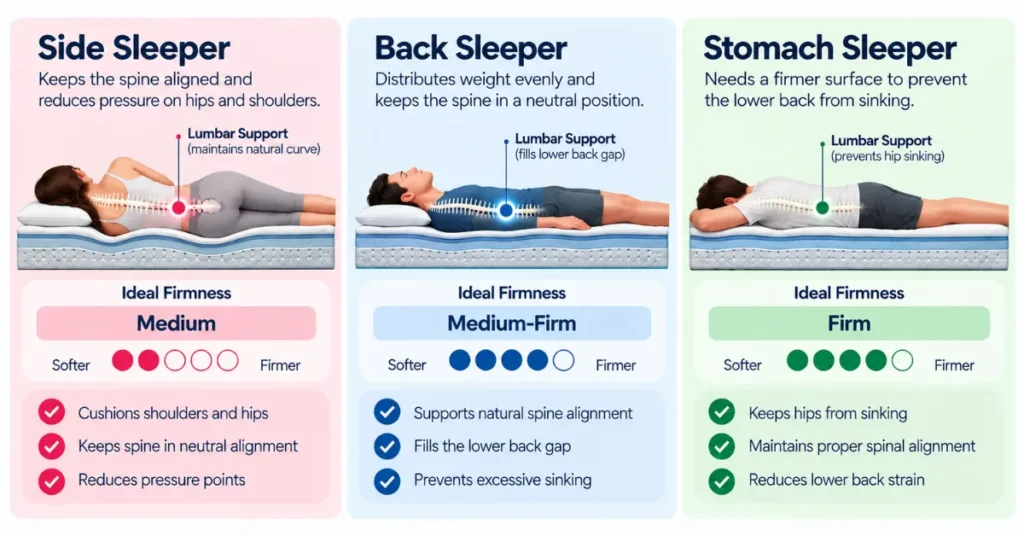
The ideal firmness for an orthopedic mattress for back pain depends on your primary sleeping position and total body weight. While back sleepers need medium-firm support to hold the lumbar curve, side sleepers require contouring cushioning, and stomach sleepers need rigid firmness to prevent pelvic drop.
Selecting mattress firmness based on personal guesswork or general marketing terms often leads to poor spinal support. Clinical studies confirm that medium-firm surfaces outperform extra-firm mattresses for broad musculoskeletal relief because they cushion body curves while maintaining structural stability.
Orthopedic Mattress for Side Sleepers
An orthopedic mattress for side sleepers must provide deep contouring at the shoulders and hips while bridging the narrower gap around the waist. A medium to medium-firm feel allows the body broadest points to sink slightly, keeping the spine completely straight from neck to pelvis.
When side sleepers rest on an excessively firm surface, the outer shoulder and hip bear the full brunt of body weight. Consequently, the spine bows upward, pinching the lower back and creating numbness or tingling across resting arms.
Opting for a mattress with pressure-relieving memory foam allows the shoulder to sink safely into the comfort layer, protecting delicate joints from painful morning stiffness.
Orthopedic Mattress for Back Sleepers
An orthopedic mattress for back sleepers requires a true medium-firm rating to support the lumbar lordosis without pushing the hips upward. Balanced resistance ensures the lower back does not flatten out, which relieves pressure from sacral joints and dorsal musculature.
Back sleeping is generally considered the most neutral posture for spinal health because body weight disperses evenly across the bed. However, if the mattress core lacks sufficient density, the heavy lumbar region drops downward, reversing the natural spinal curve.
A supportive base layer ensures the lower back remains supported in its natural resting shape throughout the entire sleep cycle.
Orthopedic Mattress for Stomach Sleepers and Heavier Individuals
A firm orthopedic mattress is mandatory for stomach sleepers and individuals weighing over 200 pounds to prevent severe pelvic sagging. Rigid foundational resistance keeps the midsection elevated, preventing hyperextension of the lumbar spine and chronic lower back pain.
When a stomach sleeper rests on a plush mattress, gravity drags the abdomen down into the foam core. As a result, the lumbar spine bends backward into hyper-lordosis, pinching delicate posterior vertebral structures and causing intense morning stiffness.
A rigid pocket spring or ultra-dense foam core counteracts this downward gravitational pull, maintaining a flat, protective spinal posture.
Advanced Features to Look for in a Supportive Mattress
Key features in an orthopedic mattress include zoned lumbar reinforcement, high-density foam cores, active cooling fabrics, and strong perimeter edge support. Focusing on these engineering details ensures the bed delivers consistent musculoskeletal decompression and long-term durability.
Many commercial beds use the orthopedic label purely as a marketing claim without offering real structural reinforcement. Discerning buyers should evaluate specific manufacturing specifications before making a purchasing decision.
- Multi-zone support cores that provide firmer resistance under the hips and gentler cushioning under the shoulders
- High-density base foams exceeding 1.8 pounds per cubic foot or heavy-gauge steel coils between 13 and 15 gauge
- Phase-change covers and breathable spacer mesh that actively pull heat away from the sleeping body
- Reinforced perimeter foam encasements that stabilize the edges when sitting down or getting out of bed
- Independent certifications like CertiPUR-US or OEKO-TEX confirming the absence of toxic off-gassing chemicals
Evaluating these specifications protects buyers from low-cost mattresses that soften and sag after only a few months of use. Genuine structural density guarantees that the mattress maintains its supportive properties across years of nightly compression.
Orthopedic Mattresses for Specific Medical and Demographic Needs
Targeted orthopedic mattress designs cater to specific physical conditions including senior arthritis, athletic recovery, pregnancy joint pain, and chronic spinal injuries. Selecting specialized zoning and responsive materials addresses distinct joint vulnerabilities and varying physical mobility requirements.
Different age groups and physical conditions place unique demands on a mattress. A configuration that suits a young athlete recovering from muscle soreness will rarely provide optimal comfort for an older adult managing degenerative disc disease.
Orthopedic Mattress for Seniors and Arthritis Sufferers
An orthopedic mattress for seniors balances gentle joint pressure relief with responsive edge support to assist with physical mobility. A medium-firm hybrid prevents arthritic joints from aching while providing a sturdy border that makes sitting up and exiting the bed manageable.
Aging joints lose cartilage and natural cushioning, making seniors highly susceptible to painful pressure hotspots over bony areas. At the same time, mattresses that are too plush create deep sinkage, which makes rolling over or getting out of bed difficult and unsafe.
A responsive pocket spring design topped with contouring foam provides joint relief while keeping movement smooth and effortless.
Orthopedic Mattress for Athletes and Active Recovery
An orthopedic mattress for athletes prioritizes rapid muscle restoration, deep tissue pressure dispersion, and advanced temperature regulation. Breathable materials and responsive foam layers boost local blood flow and ease muscular tension following intense physical exertion.
Physical conditioning places heavy demands on spinal discs, hip joints, and stabilizing leg tendons. Sleeping on an unsupportive bed forces fatigued back muscles to stay contracted all night to stabilize the spine, preventing restorative physical recovery.
A supportive hybrid bed allows tired muscle fibers to relax fully, ensuring maximum growth hormone release during restorative sleep stages.
Orthopedic Mattress for Pregnant Women
An orthopedic mattress for pregnant women provides targeted contouring for side sleeping while cushioning the expanding lumbar and pelvic regions. Progressive foam cushioning absorbs shifting body weight, easing the intense sacroiliac joint discomfort common during advanced trimesters.
Obstetric medical guidelines strongly recommend sleeping on the left side during pregnancy to optimize fetal blood circulation and kidney filtration. However, the added weight of the abdomen exerts heavy torque on the lower back and pelvis.
A zoned memory foam or hybrid mattress cushions the outer hip bone while gently supporting the belly, keeping the maternal spine comfortably aligned throughout the night.
Orthopedic Mattress Size Selection and Bed Base Compatibility
Choosing between an orthopedic mattress queen or an orthopedic mattress king depends on room dimensions, partner sharing, and the compatibility of your underlying bed frame. A high-performance mattress requires a rigid, non-yielding slatted foundation to prevent structural sagging and maintain proper spinal support.
Even the most advanced mattress will sag prematurely if it rests on a broken or flexible foundation. Ensuring your bed frame provides uniform center support is essential for maintaining warranty coverage and proper spinal alignment.
- Queen size mattresses measure 60 by 80 inches and provide sufficient space for single adults or couples with smaller bedroom layouts.
- King size mattresses measure 76 by 80 inches and give couples maximum sleeping space to reduce partner disturbance and maximize motion isolation.
- Platform frames with solid flat surfaces or slatted bases spaced no more than three inches apart prevent mattress foam from sagging between gaps.
- Adjustable bed bases allow sleepers to elevate the head and feet slightly, which opens airways and further decompresses lumbar pressure.
Pairing a high-grade mattress with a supportive foundation ensures the internal coil arrays compress straight down as engineered. This structural alignment extends the usable lifespan of the mattress and guarantees reliable spinal support across every sleep position.
Managing Mattresses on a Budget with an Orthopedic Mattress Topper
An orthopedic mattress topper offers an affordable alternative for upgrading an overly firm or unsupportive bed without purchasing a completely new mattress. Adding two to three inches of dense memory foam or latex directly over an existing mattress cushions pressure points and improves comfort.
Replacing a full mattress requires a substantial financial commitment that might not fit every immediate budget. If an existing mattress core remains flat and structurally sound without permanent deep sagging, a mattress topper provides a practical temporary fix.
However, an orthopedic mattress pad or topper cannot fix an old mattress that already has deep body impressions or broken coils. Placing a supportive topper over a sagging center simply results in the topper sinking directly into the existing dent, leaving your lower spine unsupported.
Orthopedic Mattress Price Benchmarks and Buying Safeguards
The orthopedic mattress price typically reflects internal material density, coil design, and brand manufacturing standards. Knowing realistic price tiers and securing long in-home trial periods ensures consumers invest in durable sleep systems without overpaying for superficial marketing claims.
Mattress pricing varies widely across the industry, ranging from budget foam beds sold in small shipping boxes to handcrafted luxury pocket coil builds. Understanding what features belong in each price bracket helps buyers separate marketing hype from genuine structural quality.
- Budget orthopedic mattresses range between 350 and 700 dollars and generally feature basic multi-layer polyfoam or entry-level open-coil support.
- Mid-range orthopedic mattresses fall between 800 and 1500 dollars, offering durable pocketed coils, zoned lumbar support, and advanced cooling covers.
- Luxury orthopedic mattresses exceed 1600 dollars and incorporate natural organic latex, micro-coil comfort layers, and extended 20-year structural warranties.
- Risk-free home trials ranging from 90 to 365 nights are standard among reputable brands, allowing buyers to test real spinal alignment in their home bedrooms.
Because the human musculoskeletal system requires up to four weeks to adapt to a new sleeping surface, never buy a mattress without a flexible return policy. A 100-night trial provides enough time to verify that morning lower back pain is steadily decreasing before committing to the purchase permanently.