

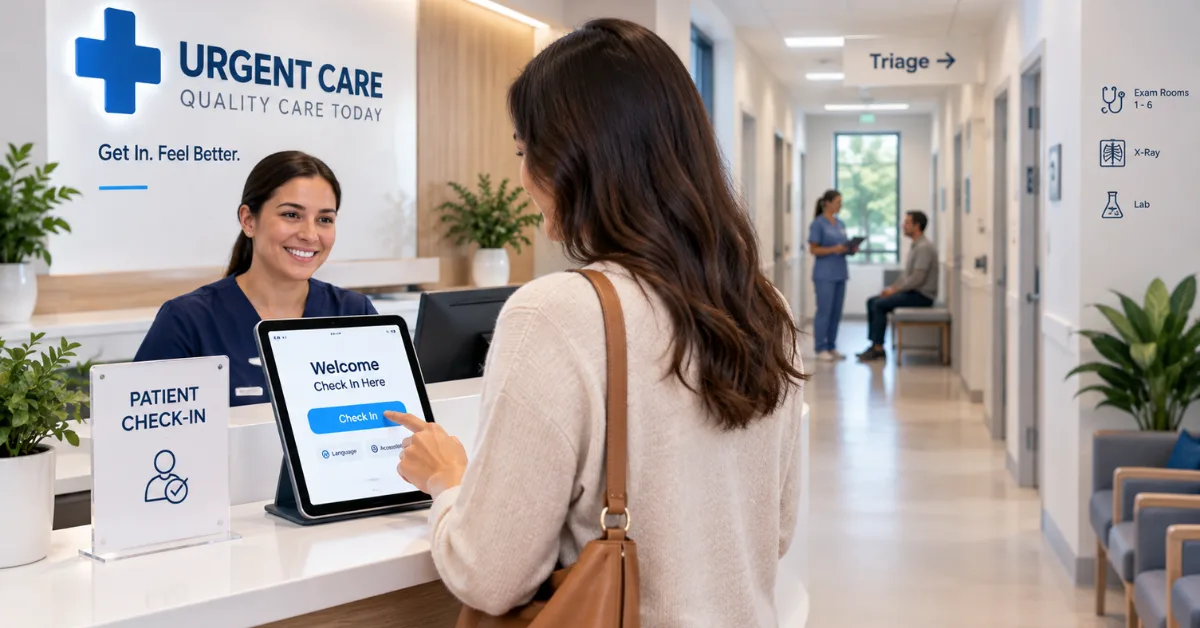
Urgent care consulting services provide specialized clinical workflow modeling, insurance billing optimization, regulatory compliance frameworks, and local search acquisition to walk-in clinics. Healthcare advisors help medical operators decrease patient wait times, capture high-margin clinical services like digital x-rays, and boost net collections per patient encounter.
Operating a modern urgent care clinic requires balancing acute clinical care with retail consumer convenience. Unlike a traditional primary care office, a walk-in facility faces unpredictable patient volume, seasonal disease spikes, and complex commercial insurance payer rules.
Independent clinic owners and multi-site healthcare operators frequently struggle with lingering wait times, slow insurance credentialing, and revenue leakage. Bringing in professional healthcare consulting transforms chaotic clinic lobbies into streamlined, profitable care delivery centers.
The following breakdown examines how strategic consulting drives clinical efficiency, optimizes service lines, and secures long-term clinic viability.
What Are Urgent Care Consulting Services
Urgent care consulting services deliver targeted operational audits, electronic health record optimizations, medical coding reviews, and payer contract negotiations to ambulatory healthcare centers. Advisors identify administrative bottlenecks, train front-desk staff on patient intake, and build staffing matrices that align clinical labor with peak visit volumes.
An urgent care center functions as a hybrid between an emergency room and a standard doctor office. Patients expect rapid evaluations for minor injuries, immediate diagnostic testing, and predictable pricing.
When a clinic lacks structured operating procedures, provider documentation slows down, leading to congested waiting rooms and high walkout rates. Professional advisors assess patient velocity from initial check-in to final discharge, locating the exact points where clinical handoffs fail.
They implement standardized operational playbooks, optimize software templates, and restructure front-desk billing verification. This structured approach ensures every clinical shift operates at maximum capacity while maintaining exceptional standards of patient safety.
Managing Internally vs Professional Urgent Care Consulting
Managing an urgent care clinic internally relies on existing staff and eliminates third-party fees, but it often perpetuates slow billing cycles and inefficient workflows. Hiring professional consulting introduces comparative regional market data, advanced billing audits, and proven systems that cut door-to-door patient times.
| Operational Metric | Internal Clinic Management | Professional Urgent Care Consulting |
| Insurance Payer Negotiations | Accepts base regional fee schedules without pushback | Leverages comparative market analytics for higher rates |
| Average Patient Wait Times | Exceeds 60 minutes during unpredictable morning peaks | Implements phased intake to achieve 35 minute visits |
| Initial Claim Rejections | Averages 15 to 25 percent billing denial rates | Drops first-pass denial rates below 5 percent via audits |
| Staffing Schedule Efficiency | Fixed daily shifts causing overtime or understaffing | Dynamic demand-based staffing matched to historical flow |
| Regulatory Audit Preparation | Reactive fixes following surprise health inspections | Proactive audit compliance across OSHA and CLIA rules |
Choosing between internal management and specialized advisory services involves evaluating organizational bandwidth against revenue opportunities. While internal leadership protects clinic routines, existing personnel rarely possess the commercial leverage needed to challenge aggressive insurance reimbursement reductions.
Outside advisors audit billing practices across thousands of previous claims, finding structural documentation gaps that internal billing managers overlook. Investing in specialized operational support pays for itself through immediate revenue cycle improvements and higher patient retention rates across competitive suburban markets.
Internal Clinic Management Pros and Cons
Handling practice management using in-house medical directors keeps daily operations within familiar leadership circles and protects immediate cash reserves from consulting expenses. However, internal teams rarely have the regional market data required to optimize commercial insurance contracts or fix deep billing deficiencies.
- Pros
- Avoids upfront third-party advisory retainers and outside contracts
- Keeps clinical protocol adjustments within the trusted existing team
- Preserves established workplace culture without outside interference
- Cons
- Limits strategic growth to the existing experience of the on-site staff
- Slows down payer credentialing cycles and commercial network entry
- Increases claim denial rates due to uncorrected coding mistakes
Relying solely on internal teams often leads to clinical blind spots where operational inefficiencies turn into accepted daily habits. Without external performance benchmarks, clinic administrators cannot easily identify whether their room turnover times or supply costs lag behind industry standards.
Professional Urgent Care Consulting Pros and Cons
Engaging an outside advisory firm delivers verified operational systems, advanced coding audits, and rapid business expansion strategies. The primary trade-offs include the required capital investment for consulting fees and the administrative discipline required to retrain long-term medical staff.
- Pros
- Identifies uncollected clinical revenue across complex procedure codes
- Reduces door-to-door patient wait times through lean triage modeling
- Secures higher commercial insurance reimbursement rates from major payers
- Cons
- Requires upfront capital expenditure for audits and monthly retainers
- Requires clinical and administrative personnel to adapt to new systems
- Involves thorough operational audits that expose uncomfortable administrative gaps
The investment required for professional guidance consistently yields substantial returns when leadership remains committed to executing the consultant recommendations. Upgrading billing software and retraining intake staff produces measurable gains in monthly cash collections within the first quarter of implementation.
Core Operational Benefits of Urgent Care Consulting
The core benefits of urgent care consulting services include optimized patient throughput, maximized net revenue collections, verified regulatory compliance, and elevated patient satisfaction. Specialized advisors transform struggling walk-in centers into streamlined healthcare assets that dominate local geographic service areas.
Operating an acute ambulatory clinic requires balancing medical precision with fast customer service. If patients face slow registration desks or delayed lab processing, they write negative online reviews and seek care from competing facilities.
Advisors build reliable operational backbones that protect clinic revenue from seasonal market volatility.
Streamlining Clinic Intake and Patient Throughput
Specialized operational consulting re-engineers front-desk registration, integrates online queuing platforms, and removes clinical bottlenecks. By replacing manual paperwork with automated intake verification, clinics reduce door-to-door wait times and increase daily patient capacity without overburdening providers.
Prolonged lobby wait times are the leading cause of patient walkouts in the ambulatory healthcare sector. Consultants analyze physical floor plans, relocating triage supplies and configuring centralized workstations to minimize provider footsteps between examination rooms.
They implement digital queuing software that enables patients to reserve treatment slots online, smoothing out arrival surges and keeping examination rooms continuously productive throughout twelve-hour operational shifts.
Maximizing Revenue Cycle and Billing Accuracy

Consultants protect clinic cash flow by auditing clinical chart documentation, correcting medical billing coding errors, and resolving persistent claim denials. These financial interventions accelerate accounts receivable collections and ensure proper reimbursement for diagnostic procedures.
A busy walk-in urgent care clinic loses significant income when providers fail to document service complexity accurately. Advisors train doctors and mid-level clinicians on proper evaluation and management coding, ensuring that treatments like laceration sutures, joint splinting, and nebulizer therapies are fully reimbursed.
They also renegotiate commercial insurance fee schedules, ensuring regional payers reimburse the clinic fairly for urgent acute care.
Maintaining Healthcare Regulatory Compliance
Advisors audit clinic documentation, laboratory equipment logs, and safety systems to ensure full compliance with HIPAA privacy laws, OSHA workplace rules, and CLIA laboratory testing standards. This rigorous oversight protects clinic owners from severe regulatory fines and catastrophic license suspensions.
Operating on-site diagnostic labs requires continuous compliance monitoring, documented temperature logs, and certified calibration records for all testing hardware. Consultants conduct unannounced mock inspections to uncover compliance gaps before government regulators arrive on-site.
They review biomedical waste management contracts, update chemical safety sheets, and ensure clinical staff maintain up-to-date credentialing files for all state medical boards.
Capturing High-Margin Urgent Care Clinical Services
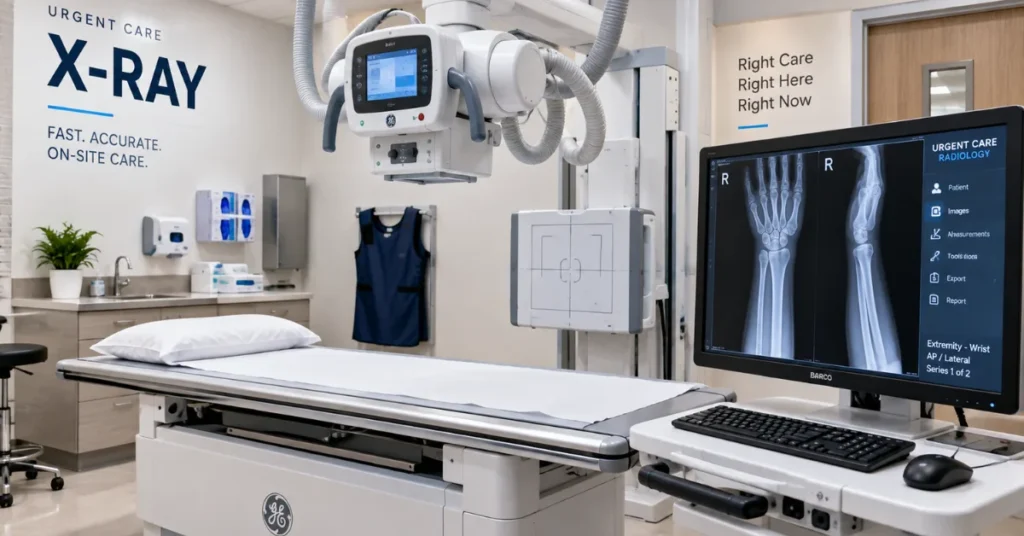
Advisors help walk-in clinics build high-margin clinical service lines including digital radiography, occupational medicine, rapid laboratory diagnostics, and minor trauma care. Packaging these clinical services allows facilities to serve as true acute care centers while diversifying revenue beyond routine viral illnesses.
A successful ambulatory center must offer far more than simple illness evaluations. Patients search for an emergency clinic or 24 hour urgent care when faced with sudden injuries that require prompt diagnostic confirmation.
Consultants structure clinical pathways so medical staff can safely treat fractures, deep lacerations, and occupational injuries on-site.
Urgent Care X-Ray Services and Fracture Management
Integrating on-site urgent care X-ray services allows clinicians to diagnose and manage fractures, dislocations, and joint sprains without redirecting patients to expensive hospital emergency rooms. Advisors establish digital image transmission workflows and teleradiology partnerships to deliver certified radiology reads within thirty minutes.
Providing immediate orthopedic imaging transforms an ordinary clinic into an essential community emergency alternative. Advisors guide operators through equipment selection, radiation shielding installations, and state licensing protocols for high-frequency digital x-ray units.
They build standardized clinical protocols for immobilization splinting and establish referral pipelines with regional orthopedic surgeons for patients requiring surgical intervention.
Urgent Care Stitches and Minor Wound Repair
Equipping clinic procedure rooms for urgent care stitches and advanced laceration repair captures high-acuity patient volume seeking an affordable alternative to hospital emergency departments. Advisors train nursing staff on sterile tray preparation and establish inventory systems for sutures, surgical glue, and wound dressings.
Treating traumatic cuts and lacerations requires rapid triage to prevent infection and minimize cosmetic scarring. Consultants configure dedicated minor procedure suites stocked with adequate lighting, electrocautery tools, and specialized suture materials.
They build standardized clinical charts that capture wound length, depth, and anatomical location, ensuring accurate procedural billing under commercial insurance policies.
Rapid Lab Testing for Acute Conditions
Equipping clinics with moderate-complexity testing hardware enables immediate diagnostic confirmation for urgent care for UTI, respiratory pathogens, and infectious illnesses. Fast lab turnarounds accelerate treatment decisions and improve clinical outcomes for acute infections.
Patients presenting with severe discomfort need definitive diagnostic answers before leaving the clinic exam room. Consultants establish automated point-of-care laboratory setups that process rapid strep screens, influenza panels, urinalysis, and blood chemistry testing in under fifteen minutes.
Automating lab data entry directly into electronic health records minimizes clerical errors and ensures every diagnostic test links cleanly to billing insurance claims.
Urgent Care vs Emergency Room Strategic Positioning
Positioning a walk-in clinic as a cost-effective alternative to an emergency room requires transparent pricing, fast service delivery, and clear marketing regarding clinical capabilities. Consultants build educational campaigns that show patients how walk-in centers deliver substantial cost savings for non-life-threatening emergencies.
Patients facing acute medical distress often struggle to choose between visiting an emergency clinic or a local urgent care center. When clinics communicate their clinical scope effectively, they attract patients who want to avoid the crushing expenses and multi-hour delays of hospital facilities.
Advisors help clinic owners capture this market share through strategic community positioning.
| Care Setting | Average Patient Cost | Typical Door-to-Door Time | Clinical Scope of Services |
| Urgent Care Center | 100 to 250 dollars | 30 to 45 minutes | Minor fractures, lacerations, burns, rapid labs, infections |
| Hospital Emergency Room | 1200 to 3000 dollars | 120 to 240 minutes | Heart attacks, strokes, major trauma, surgical emergencies |
| Primary Care Office | 75 to 175 dollars | Requires advance booking | Chronic disease care, annual physicals, preventive medicine |
Clear cost transparency represents a major competitive advantage for independent urgent care operators. Hospital emergency rooms charge enormous facility fees that surprise patients with four-figure medical bills weeks after treatment.
Consultants establish flat-rate self-pay pricing schedules for uninsured visitors, ensuring upfront clarity that builds deep community trust. By marketing low out-of-pocket costs and rapid rooming times, clinics attract self-pay individuals and high-deductible insurance policyholders away from congested regional hospitals.
Digital Patient Acquisition for Walk-In Clinics
Capturing local patient volume requires a powerful digital footprint that dominates search queries for an urgent care near me or an urgent care open now. Healthcare consultants optimize search engine profiles, streamline online booking tools, and manage digital review reputations to drive steady patient traffic.
Modern healthcare consumers choose medical providers using smartphones while dealing with sudden injuries or worsening illnesses. If a medical facility fails to appear at the top of local map searches, prospective patients simply drive to the next available competitor.
Advisors install targeted search acquisition frameworks that keep clinics visible during critical moments of medical need.
Local Search Engine Optimization and Google Business Profiles
Dominating search visibility for urgent care in [city/neighborhood] demands rigorous optimization of Google Business profiles, precise local directory citations, and localized landing pages. Advisors ensure accurate operating hours, listed phone numbers, and physical addresses across all major online medical directories.
Local search algorithms prioritize medical centers with consistent geographical information and verified operational hours. Consultants update directory listings across mapping networks, ensuring holiday schedules and extended evening hours reflect real-time clinic availability.
They implement localized content strategies targeting specific medical treatments, enabling clinics to rank prominently when residents search for rapid illness evaluations or sports physicals within specific neighborhoods.
Online Scheduling Engines and Virtual Waiting Rooms
Integrating automated reservation engines allows patients to view live clinic wait times and reserve examination slots directly from their smartphones. Providing real-time transparency reduces perceived wait times, lowers lobby congestion, and secures patient commitments before they leave home.
Modern medical consumers expect the same digital convenience from healthcare facilities that they experience in retail environments. Consultants deploy specialized scheduling widgets that sync directly with electronic health records, preventing overbooking during sudden staffing shortages.
Allowing patients to wait in the comfort of their vehicles or homes eliminates lobby crowding, reduces exposure to contagious illnesses, and elevates satisfaction scores.
Review Management and Patient Retention Systems
Automated post-visit messaging systems capture patient feedback immediately following discharge, prompting satisfied visitors to leave positive digital reviews on public rating platforms. Rapidly addressing negative feedback protects the clinic reputation and resolves operational complaints before they escalate.
A medical center digital reputation directly influences its daily patient volume. Advisors implement automated messaging software that texts discharged patients within an hour of leaving the facility, inviting them to complete brief satisfaction surveys.
High review ratings boost search rankings, while structured private feedback loops alert management to front-desk discourtesy or billing confusion before unhappy patients post public complaints.
Clinical Staffing Models and Provider Retention
Consultants design dynamic staffing matrices that adjust physician, nurse practitioner, and medical assistant coverage according to historical patient arrival patterns. Implementing structured onboarding protocols and competitive incentive packages cuts expensive clinician turnover and stabilizes clinical operations.
Payroll represents the single largest operating expense for an independent medical center. Overstaffing during slow morning hours erodes profit margins, while understaffing during peak evening surges creates severe provider burnout and increases medical error risks.
Advisors build data-backed staffing formulas that maintain safe, efficient operations throughout every operational shift.
Historical intake data directly informs the flexible staffing matrix, allowing administrators to deploy optimized shifts that balance clinical workloads. When shifts align with patient arrival curves, clinicians document visits using standardized single-screen charting rather than falling behind on medical records.
This operational balance eliminates charting backlogs, protects staff morale, and significantly reduces provider burnout across long twelve-hour shifts.
Advisors cross-train medical assistants to handle administrative intake alongside basic clinical tasks, including phlebotomy, diagnostic swab collection, and electrocardiograms. This operational flexibility ensures nursing teams shift smoothly between rooming patients and answering telephone inquiries based on real-time lobby volume.
Advisors also establish clinical governance committees that standardize treatment protocols, giving advanced practice providers clear guidance when prescribing controlled substances or managing complex patient presentations.
Walk-In Clinic Operational Turnaround and Performance Metrics
A suburban urgent care facility recovered operating profitability by eliminating patient registration delays, retraining clinical providers on rapid charting, and expanding into occupational health contracts. Within six months, the clinic dropped door-to-door wait times by 51 percent while increasing monthly net revenue by 66 percent.
Independent walk-in centers frequently experience negative cash flow despite maintaining healthy daily patient numbers. For instance, an established suburban facility was treating forty patients each day but continued to lose operating cash every month.
Therefore, clinic ownership commissioned an intensive operational audit to identify administrative leaks and stabilize financial performance.
Locating Initial Workflow Deficiencies
The advisory audit revealed that manual paperwork, sluggish software interfaces, and underutilized morning shifts caused significant cash flow losses. In particular, front-desk staff relied on physical clipboards, which forced receptionists to re-enter demographic details manually while patient queues backed up into the lobby.
As a direct consequence of this manual entry, patient rooming suffered an immediate twenty-minute delay before clinicians could begin evaluations. Meanwhile, medical providers were documenting visits on a slow primary care software platform that required fifteen minutes of typing for routine viral complaints.
Furthermore, the facility lacked commercial service agreements with local employers, which left clinical staff largely idle throughout weekday morning hours.
Strategic Operational Interventions
Healthcare advisors resolved these administrative bottlenecks by deploying cloud-based mobile check-in software, building customized rapid charting templates, and launching dedicated employer health services. Consequently, these systematic workflow corrections eliminated intake friction and protected provider time across every operational shift.
- First, the clinic deployed an ambulatory electronic records system that allowed visitors to complete registration and insurance verification on their smartphones.
- Second, advisors configured single-screen charting templates for acute conditions like strep throat, lacerations, and urinary tract infections, which lowered documentation time to four minutes per encounter.
- Third, billing specialists overhauled coding procedures, ensuring clinical staff attached proper modifiers to procedural treatments and diagnostic x-rays.
- Finally, the management team partnered with regional warehousing hubs and school districts to deliver scheduled pre-employment drug screenings and sports physicals.
Because these operational changes removed clerical friction, daily patient throughput expanded without requiring additional physician hires. In addition, front-desk staff verified patient insurance copays before evaluations began, which immediately reduced uncollectible balances.
Measured Financial and Operational Results
The six-month restructuring generated dramatic improvements across patient velocity, billing accuracy, and overall cash collections. Consequently, the medical facility eliminated excessive staffing overtime, reduced billing denials below five percent, and transformed an ongoing operating deficit into a sustainable monthly surplus.
| Performance Metric | Initial Baseline | Post-Restructuring Result | Measured Improvement |
| Average Door-to-Door Time | 74 minutes | 36 minutes | 51 percent reduction |
| Initial Insurance Denial Rate | 24.2 percent | 3.8 percent | 84 percent reduction |
| Days in Accounts Receivable | 56 days | 29 days | 48 percent improvement |
| Daily Patient Encounters | 42 visits | 71 visits | 69 percent increase |
| Monthly Net Revenue | 148000 dollars | 246000 dollars | 66 percent increase |
Ultimately, these documented gains demonstrate that clinic profitability relies on streamlined administrative execution rather than raw clinical volume alone. Furthermore, by addressing intake bottlenecks and enforcing clean insurance claims, the facility established long-term financial viability while delivering significantly faster medical care.
























2 responses to “Urgent Care Consulting Services, Operations, Revenue, and Growth”
Everyone loves it when people get together and share ideas.
Great blog, continue the good work!
Thank you so much for the kind words. We truly appreciate your support and are really glad you’re enjoying the blog. Comments like yours are incredibly motivating and encourage us to keep sharing and creating valuable content.