

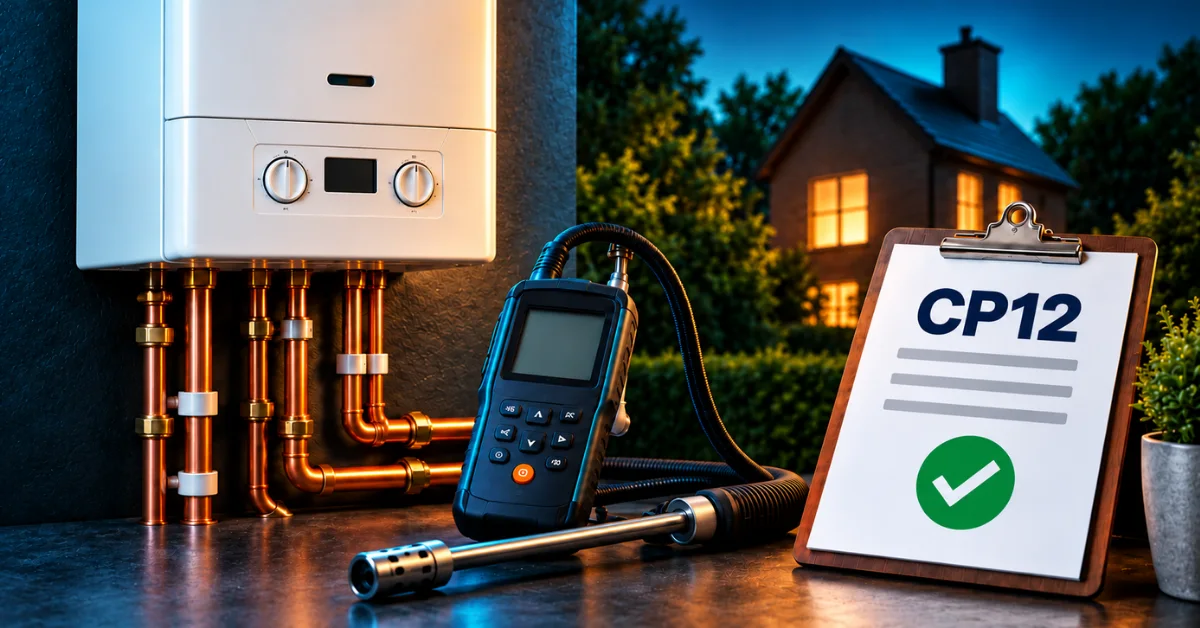
A gas safety certificate, also called a CP12, typically costs £60 to £110, depending on location and appliance count. Landlords must arrange annual checks through a Gas Safe registered engineer, with permitted early-renewal flexibility. Existing tenants must receive the record within 28 days, and new tenants before moving in.
Operating a private residential letting in the UK carries strict responsibilities under statutory heating safety legislation. Landlords who overlook annual checks face heavy court fines and potential difficulties with property insurance claims. A valid gas safety certificate, known throughout the property sector as a cp12 certificate, provides formal proof that gas appliances and flues operate safely.
Understanding the real gas safety certificate cost, annual renewal rules, and ongoing landlord duties ensures property owners stay compliant with Health and Safety Executive standards.
What Is a CP12 Gas Safety Certificate
A cp12 gas safety certificate is the official safety record issued after an accredited Gas Safe engineer inspects gas equipment in a rented property. The abbreviation CP12 stands for CORGI Proforma 12. This historical name comes from the Confederation for the Registration of Gas Installers, which managed UK gas registrations until the Gas Safe Register took over in 2009. The document is officially titled the Landlord Gas Safety Record.
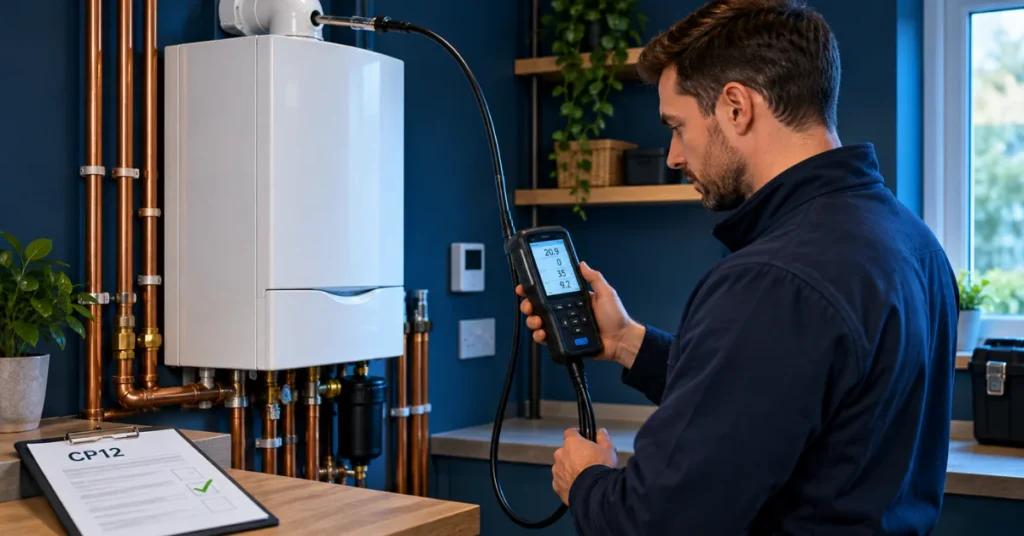
The completed gas safety report lists every appliance checked, records operating burner pressures, verifies flue performance, and documents identified defects. Landlords must obtain a landlord gas certificate for all gas appliances and flues provided for tenant use.
How Long Is a Gas Safety Certificate Valid For
Landlords must normally arrange gas safety checks every 12 months. Eligible early checks can preserve the original annual deadline.
Under Regulation 36A of the Gas Safety Installation and Use Regulations 1998, landlords have access to a flexible early renewal window. An engineer can inspect the property up to two months before the current certificate expires whilst preserving the original renewal date. If an active certificate expires on 31 October, the check can take place on 1 September, and the new expiry date will still remain 31 October of the following year. Having the inspection completed earlier than that two-month window resets the annual cycle to the new check date.
There is zero legal grace period once the current validity period ends. If the renewal date passes without a new inspection, the landlord stands in breach of safety regulations until an accredited engineer completes the check.
Gas Safety Certificate Cost and Price Factors

The national average gas safety check cost typically falls between £60 and £110 for a standard domestic property with one boiler and a gas hob. Total invoices depend on whether you book an independent engineer or a national utility provider, your property location, and the number of appliances requiring inspection.
Pricing varies across the industry. Independent Gas Safe registered engineers typically charge between £60 and £90 for an inspection on a property with a single boiler. National energy suppliers such as British Gas typically charge around £108 including VAT for a single appliance, with additional charges for extra gas appliances. While national suppliers offer integrated customer portals, independent local tradespeople often provide lower base rates and greater scheduling flexibility.
Typical UK Inspection and Service Costs
| Service or Property Type | Typical Independent Cost Range | Typical National Supplier Cost Range | Work Scope |
| One gas boiler only | £60 to £85 | £95 to £115 inclusive of VAT | Safety check of boiler and associated flue |
| Boiler and one gas hob | £75 to £100 | £140 to £165 inclusive of VAT | Safety check of two domestic gas appliances |
| Boiler, gas hob, and gas fire | £90 to £120 | £180 to £220 inclusive of VAT | Safety check of three domestic gas appliances |
| Each additional appliance | £10 to £20 | £40 to £60 inclusive of VAT | Additional appliance and flue assessment |
| Combined boiler service and CP12 | £110 to £150 | £165 to £210 inclusive of VAT | Legal safety check plus mechanical maintenance |
| London residential properties | £80 to £120 | £130 to £175 inclusive of VAT | Regional rate reflecting urban travel expenses |
| HMO properties with multiple boilers | £140 to £220 | £210 to £300 inclusive of VAT | Complex pipework tests and multiple appliances |
Value Added Tax also affects final bills. Heating engineers registered for VAT must charge the standard 20 percent rate on their labour. Sole traders operating under the statutory registration threshold may not charge VAT unless they registered voluntarily.
What Influences the Final Price
- Additional appliances increase inspection time because the engineer must test flame safety devices and flue pull on every unit.
- London addresses carry higher labour charges, parking fees, and congestion charges.
- Booking a combined boiler service alongside the safety check is cheaper than paying two separate call-out fees.
- HMO properties require more time because engineers must check extra pipework runs and multiple meter connections.
- Last-minute emergency appointments or weekend bookings carry higher call-out fees.
- Fixing discovered faults is not included in the standard certificate fee.
Gas Safety Certificate Costs in London
Landlords seeking a gas safety certificate in London pay higher rates than property owners in northern England or the Midlands. Average prices in Greater London range between £80 and £120 for an independent engineer, and climb higher with national utility brands.
These higher rates stem from substantial operational overheads. Parking permits and restricted loading zones in inner London boroughs add direct costs to every appointment. In addition, Ultra Low Emission Zone charges and Congestion Charge tariffs increase daily expenses. Higher regional workshop leases, technician wages, and dense urban traffic restrict the total number of inspections an engineer can complete in one working day.
Legal Rules for UK Landlords
The Gas Safety Installation and Use Regulations 1998 place distinct duties on residential landlords across England, Scotland, and Wales. Landlords must arrange an annual safety check for every relevant gas appliance and flue. In addition, landlords have an ongoing duty under Regulation 36(2) to maintain gas pipework in a safe condition.
Landlords must follow statutory administrative procedures:
- Give existing tenants a copy of the completed certificate within 28 days of the inspection.
- Give incoming tenants a copy before they take occupation of the property.
- Keep copies of every annual certificate for at least two years.
- Ensure any appliance tagged as unsafe is rectified or disconnected before further use.
Gas safety responsibilities remain unchanged under the Renters’ Rights Act. Landlords must maintain continuous, documented gas safety records to safeguard tenants, avoid civil penalties from local authorities, and prevent legal challenges during statutory possession claims. Failing to maintain current records can also breach property insurance terms, leaving owners liable for damages if an uninspected installation causes harm.
Managing Tenant Access for Inspections
Landlords occasionally face difficulties arranging safety checks when tenants do not respond or deny access. Landlords cannot force entry or change locks without a court order. The Health and Safety Executive expects property owners to demonstrate that they took all reasonable steps to carry out the check.
Industry practice involves establishing clear written records of all communication. Landlords should retain copies of every text message, email, and letter sent regarding appointment times. A sensible protocol involves sending multiple written requests explaining that the annual check is a statutory safety requirement. Offering alternative time slots, including early morning appointments, demonstrates flexibility. If a tenant continues to refuse access, a landlord can apply to the county court for an access injunction. Whether steps are deemed reasonable depends on the circumstances and rests with the court if formal enforcement arises.
Boiler Service Versus Gas Safety Certificate
Many landlords confuse a routine boiler service with a mandatory gas safety inspection. While heating engineers frequently carry out both tasks during the same appointment, they fulfill different objectives.
A mechanical boiler service focuses on heating efficiency, system cleaning, and component longevity. The technician removes the boiler casing, cleans the burner assembly, checks the heat exchanger, tests electrical connections, and inspects seals to maintain the manufacturer warranty.
A landlord gas safety check is purely a compliance inspection. The engineer does not strip internal components or adjust mechanical performance. The visit simply confirms whether the equipment operates safely without venting hazardous fumes or leaking gas. Booking both procedures in a single appointment saves money and protects heating hardware while fulfilling statutory duties.
Warning Notice Classifications on a Gas Safety Record
When an engineer discovers an installation defect, they classify the risk according to the Gas Industry Unsafe Situations Procedure.
An Immediately Dangerous finding indicates an urgent risk to life or property. Examples include confirmed gas leaks or severe flue gas spillage. The engineer will ask for permission to disconnect the appliance from the gas supply, turn off the installation, and attach a formal warning label stating not to use the equipment.
An At Risk finding indicates an installation with a defect that could result in a danger to life or property if left operating. The engineer will turn off the appliance with permission, attach a warning label, and issue a formal warning notice recommending repairs.
Older guidance formerly referenced Not to Current Standards. This classification was removed from the official unsafe situations procedure because installations failing modern building standards are not inherently unsafe. An engineer may note minor standard improvements separately, but only Immediately Dangerous and At Risk classifications trigger formal unsafe warning notices.
Do Homeowners Need a Gas Safety Certificate
Owner-occupiers generally do not need a CP12 certificate. The statutory duty to hold an annual gas safety record applies to tenanted properties where a landlord rents out accommodation.
However, commissioning an annual gas inspection and boiler service remains sensible practice for private homeowners. Regular checks confirm that appliances burn fuel cleanly without producing carbon monoxide, prevent sudden heating breakdowns, and keep boiler warranties valid. Homeowners preparing to sell also benefit from keeping annual records, as buyer solicitors and mortgage surveyors routinely request evidence of recent gas safety during conveyancing.
Gas Safety Rules for Commercial Properties
Commercial premises operate under workplace health legislation rather than residential tenancy rules. While there is no universal annual CP12 requirement written into commercial property statutes, annual gas inspections are usually required by commercial insurers or lease terms.
Commercial kitchens, catering businesses, and office properties must ensure gas equipment operates safely under the Health and Safety at Work Act 1974. Inspections must be carried out by engineers holding commercial gas competencies rather than domestic credentials. If an insurer discovers uncertified gas equipment following an accident or leak, they may decline policy claims depending on the policy wording.
Arranging an annual gas safety inspection protects property investments, safeguards tenants from carbon monoxide exposure, and ensures reliable property management across the UK rental sector. Keeping organized digital copies of every certificate prevents administrative delays and demonstrates complete regulatory compliance year after year.