

Plant based caramel is a dairy-free confectionery formulation that replaces traditional butterfat and heavy cream with refined coconut fat, date paste, or enzymatic oat cream. Food manufacturers use these ingredients alongside sucrose cooked between 165°C and 170°C to match the texture, color, and mouthfeel of classic dairy caramel without artificial additives.
The global vegan confectionery market reached USD 1.34 billion in 2023 and is projected to hit USD 3.1 billion by 2032, recording an annual growth rate of 9.8 percent according to Global Market Insights. Dairy-free caramel has transitioned from a specialized allergen substitute into a primary retail driver. It combines traditional sweet indulgence with clean labels for shoppers who check ingredient panels before buying.
The commercial growth of this flavor comes down to three clear drivers: supply chain efficiency in commercial manufacturing, nationwide supermarket shelf expansion, and tighter thermal controls in food laboratories.
The Market Data Behind the Sweet Category Shift
Retail grocery sales are fueling the expansion of dairy-free confectionery, outpacing conventional packaged food lines where annual gains rarely pass low single digits. Flexitarian households, buyers avoiding lactose, and consumers rejecting synthetic additives all push the same demand curve.
The physical format of commercial caramel explains why large food processors adopted it so quickly.
According to Global Market Insights data on caramel ingredients, liquid formats held 60 percent of the total market share in 2023. Liquid bases handle the heavy work on commercial production lines. Automated pumps, flow meters, and industrial mixers transport liquid caramel into pastry centers, bottled cold brew coffees, frozen desserts, and nutritional snack bars without needing an extra melting step.
When a contract packaging facility updates a bulk liquid base from animal butterfat to plant lipids, that update applies across every production run on the floor. Updating one high-volume liquid recipe is far more cost-effective for a food company than engineering, testing, and marketing an isolated vegan product line from scratch.
Supermarket Aisles Replace Specialty Health Sections
Snack brands with national grocery distribution now formulate salted caramel as a plant-based standard rather than an expensive dairy item.
Nature’s Bakery proved this commercial shift in March 2024 with the launch of its Salted Caramel Brownie. The product rolled out to mainstream supermarkets by combining whole grains, date paste, and dairy-free chocolate. Instead of using dairy butterfat, the formulation gets its rich chew and caramelized flavor directly from concentrated fruit sugars and whole grains.
Dates provide the necessary sweetness, chewy texture, and slight bitterness that consumers expect from cooked caramel. Whole grains supply fiber and structural body. The resulting snack appeals equally to someone wanting a sweet treat and a parent looking for clean ingredients. Food companies generate steady sales from two customer groups without running two separate product inventories.
Industry trade gatherings like Natural Products Expo West show where consumer goods are heading next. Ingredient formulations that debut in sampling booths at these events regularly land on mainstream retail shelves within nine to twelve months.
How Commercial Plant Bases Stack Up
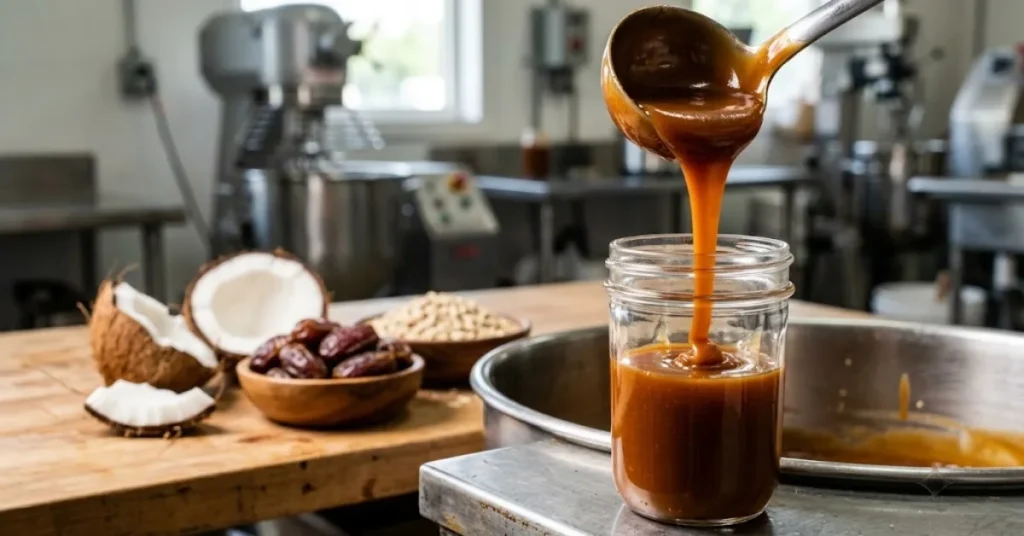
Natural caramel ingredients commanded a 67.4 percent global market share in 2025, according to Mordor Intelligence. Modern consumers pay close attention to whether caramel color and flavor come from real cooked sugar or synthetic dye additives.
Replacing animal butterfat requires balancing saturated fats, water activity, and cooking temperature limits. The comparison table below shows how the primary plant bases perform in commercial manufacturing setups.
| Ingredient Base | Key Functional Fat or Sugar | Temperature Safe Range | Emulsion Stability | Main Commercial Use |
| Refined Coconut Cream and Oil | Saturated lauric fats | 165°C to 170°C | High stability and sets firm below 24°C | Dipping sauces, firm candy centers, chocolate coatings |
| Date Paste | Invert fruit sugars and pectin fiber | Safe up to 110°C, scorches above 120°C | Resists oil weeping at room temperature | Baked snack fillings, raw snack bites, whole food bars |
| Enzymatic Oat Milk Concentrate | Oat starches and beta-glucan | Tolerates up to 140°C | Moderate stability and stays pourable when chilled | Bottled coffee syrups, dessert drizzles, beverage bases |
Liquid plant-based caramel provides three measurable operational advantages:
- Faster mixing on the line: Pourable plant caramel blends straight into cold drink bases or hot batters without forming lumps, cutting down tank wash times.
- Longer shelf life at room temperature: Removing dairy cream eliminates rapid lipid oxidation. Sealed containers stay stable at room temperature for twelve to eighteen months without artificial preservatives.
- Clean label verification: Recipes stick to simple ingredients that buyers recognize, including unrefined sugar, plant fat, sea salt, and real vanilla.
Technical Temperature Parameters for Plant Caramelization
Traditional dairy caramel depends on milk proteins reacting with sucrose. With plant-based production, temperature control is everything because alternative fats and sugars react differently to heat.
Commercial food laboratories follow strict thermal limits to stop sauces from separating or turning gritty:
- Sugar breakdown: Sucrose begins breaking down at 160°C. For deep amber color without scorched notes, batch heat must stay between 165°C and 170°C.
- Adding plant fats: Pouring cold plant milk into boiling sugar causes thermal shock, which instantly turns the sugar into hard chunks. Processors warm their coconut or oat fat bases to at least 75°C before stirring them into the hot sugar.
- Sugar density: Pourable dessert drizzles run at 72 to 75 Brix. Firm candy centers and chocolate fillings run between 82 and 85 Brix so they hold their shape at room temperature.
Technical Trade-Offs and Formulation Challenges
While plant-based caramel offers clear shelf-life advantages, food scientists still face two major formulation hurdles on the line:
- The cold flow problem: Plant fats have lower melting points than dairy butterfat. Confectionery bars filled with unrefined coconut oil can become runny when stored above 22°C. To prevent the filling from leaking out, processors must blend fractionated plant fats with small amounts of sunflower lecithin to lock the oil into the sugar matrix.
- Off-flavor masking: Unrefined coconut oils impart a strong tropical taste that clashes with salted caramel profiles. Commercial formulators must use fully refined, bleached, and deodorized coconut fat to ensure a completely neutral base that lets the cooked sugar flavor lead.
Market Outlook for 2027 and Beyond
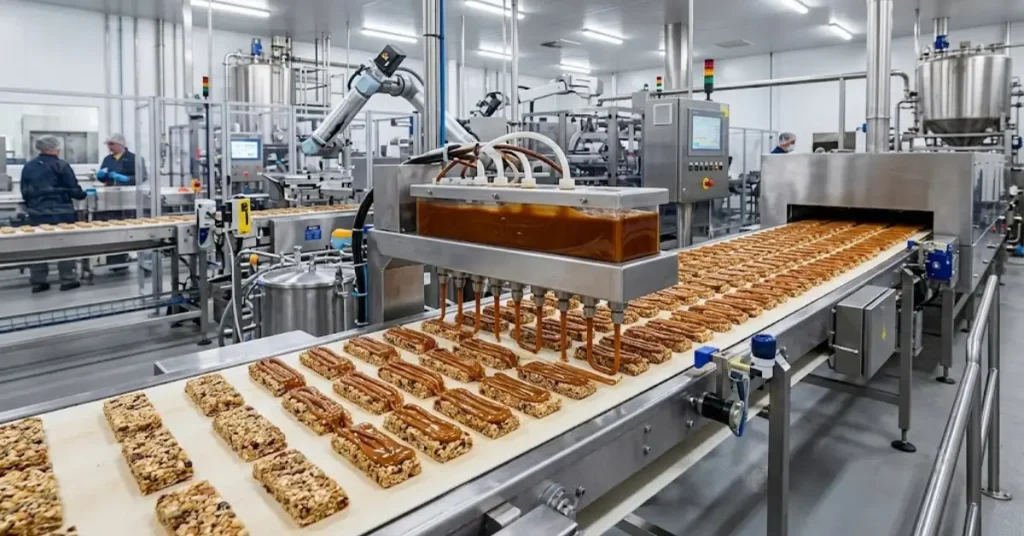
The shift toward plant-based caramel is a permanent manufacturing standard rather than a short-term trend. Once a food enterprise tests and scales a shelf-stable liquid plant base across its factory network, switching back to animal dairy makes no economic or logistical sense.
Factory production schedules point to plant-based caramel expanding across several fast-growing sectors:
- Bottled functional drinks: High-protein ready-to-drink shakes and cold brew coffees need caramel syrups that will not curdle in acidic liquids.
- Dairy-free ice cream: Plant fats keep frozen desserts scoopable and stop icy separation after repeated freezing and thawing.
- Bakery items: Moisture-controlled caramel fillings prevent cookies from getting soggy while sitting on warehouse pallets.
Plant-based caramel handles long distribution cycles, simplifies factory sourcing, and meets customer expectations for clean labels. It is no longer an alternative recipe. It is the modern commercial benchmark for sweet confectionery.