
The traditional boundary between dedicated gym members and at-home fitness enthusiasts has dissolved. Driven by continuous biometric sensors, interactive streaming platforms, and connected strength hardware, fitness has transitioned into an integrated, data-guided lifestyle. Modern athletes no longer train in isolation; they use connected ecosystems to optimize daily workout volume, monitor nervous system recovery, and eliminate wasted travel time.
Understanding how wearable intelligence, virtual training platforms, IoT equipment, and hybrid programming intersect allows you to build a resilient, performance-driven routine that fits seamlessly into your daily schedule.
Biometrics Beyond Basic Step Counting
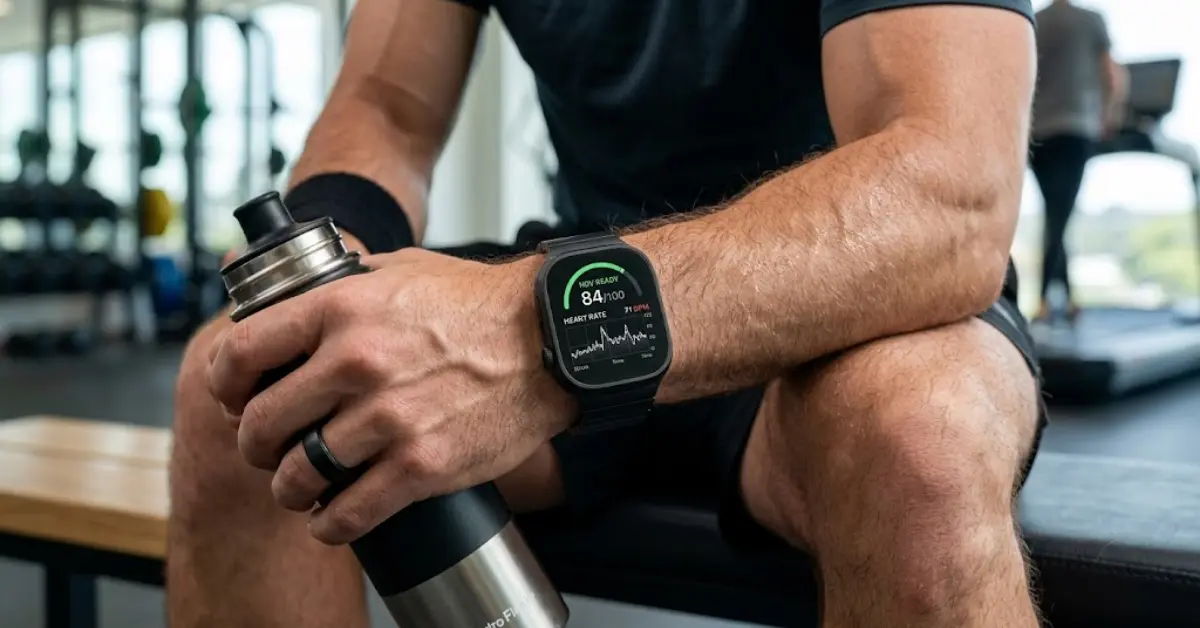
Wearable fitness tech has moved past simple pedometer mechanics into continuous physiological monitoring. Modern hardware tracks autonomic nervous system responses and metabolic indicators, shifting the focus from arbitrary daily step goals to personalized central nervous system recovery.
- Heart Rate Variability (HRV) Baselines: Dedicated tracking algorithms analyze microsecond variations between heartbeats to assess autonomic balance. A suppressed HRV score indicates systemic fatigue, signaling that you should substitute a heavy compound lifting session with low-intensity active recovery.
- Sleep Architecture and Temperature Sensors: Advanced devices like the Oura Ring 4 and WHOOP 5.0 track deep, light, and REM sleep cycles alongside nighttime skin temperature fluctuations. These multi-sensor arrays detect early signs of metabolic strain or immune disruption before physical symptoms appear.
- Metabolic and Biomarker Insights: Continuous biosensing platforms like Levels and Supersapiens monitor glucose response to nutrition and exercise. Real-time fueling data allows athletes to time carbohydrate intake accurately and prevent mid-session energy crashes.
- Real-Time Strain and Training Load: Multisport smartwatches like the Garmin Fenix 8 and Apple Watch Ultra 3 measure continuous cardiovascular output, calculating cumulative training strain across workouts and daily activities to prevent overtraining.
- Unobtrusive Form Factors: The transition from bulky wrist monitors to lightweight smart rings and low-profile chest sensors enables continuous day-and-night tracking without screen distraction.
The Growth of Immersive and Virtual Training
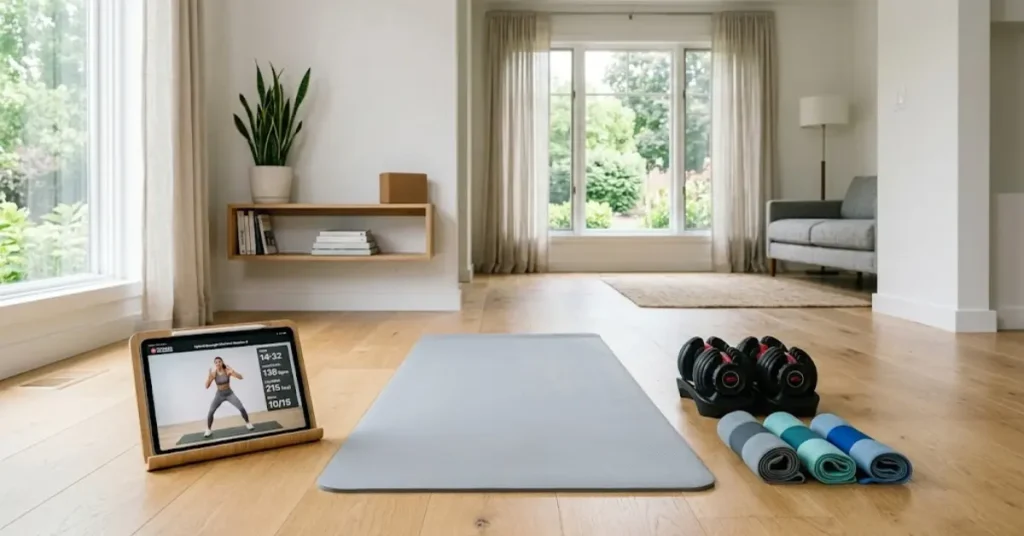
Virtual fitness platforms are no longer passive video libraries. Connected hardware, high-production streaming, and immersive spatial software turn home spaces into competitive, technique-focused studios.
- Cinema-Grade Group Fitness Ecosystems: Platforms such as Les Mills Virtual (offering BODYPUMP™ and BODYCOMBAT™) and Fitness On Demand deliver broadcast-quality studio classes with dynamic soundtracks and elite coaches, making high-energy group training accessible from home.
- Functional Group Streaming and Habit Gamification: Programs like F45 Live and the F45 Challenge App combine high-intensity team workouts with structured meal plans, achievement badges, and live leaderboards to maintain daily workout streaks and group accountability.
- Smart Home Gym Resistance: Machines like Tonal and Speediance replace iron weight plates with electronic resistance. The machine changes the weight automatically while you lift, making the negative part of the rep heavier or dropping the weight if you get stuck.
- Computer-Vision Form Tracking: Smart cameras and device sensors monitor skeletal joint angles during barbell and bodyweight movements, delivering instant feedback to correct spinal alignment, bar paths, and squat depth.
- Gamified Spatial Conditioning: Virtual reality platforms make high-intensity cardio, agility drills, and rhythm boxing engaging, providing strenuous conditioning workouts without traditional treadmill monotony.
Smart Gym Equipment and Commercial IoT Integration
The integration of the Internet of Things (IoT) is turning traditional commercial gym floors into connected data centers. Modern gym machines now communicate directly with your personal device to automate workout logging and optimize load management.
- Automated Rep and Velocity Tracking: Sensor-equipped selectorized weight stacks and smart cable machines automatically track completed repetitions, time under tension, and movement velocity, eliminating the need for manual gym notebooks.
- On-Site Hybrid Virtual Studios: Commercial fitness centers increasingly feature dedicated virtual projection rooms. Utilizing platforms like Les Mills Virtual, gyms stream on-demand classes on cinema-sized displays 24/7, allowing members to access instructor-level studio training during off-peak hours when live trainers are unavailable.
- Connected Cardiovascular Consoles: Smart treadmills, rowers, and stationary bikes automatically sync workout telemetry (wattage, heart rate zones, cadence) with Apple Health, Garmin Connect, and third-party training logs upon scanning a mobile QR code.
The Hybrid Workout Framework: In-Gym Power Meets Remote Versatility
The hybrid model recognizes that no single training environment satisfies every physical goal. Instead of committing to just one location, you allocate specific training objectives to the setting best suited for them.
| Performance Factor | Traditional Gym Setup | Solo Home Training | Modern Hybrid Model |
| Schedule Control | Low (requires commuting and waiting for machines) | High (frictionless start at home) | High (gym when schedule allows, home when busy) |
| Equipment Access | Heavy barbells, plate-loaded machines, cables | Adjustable dumbbells, bands, pull-up bars | Full commercial heavy gear plus compact home tools |
| Progress Tracking | Manual notebooks or static gym apps | Basic timers and workout logs | Unified wearable sync across all platforms |
| Community Factor | In-person camaraderie and spotting | Solitary or forum-based chat | In-person coaching paired with digital teams |
Commercial facilities provide heavy barbell racks and selectorized machines necessary for progressive overload. Meanwhile, home setups handle cardiovascular conditioning, core stability, and targeted mobility drills. Blending the two environments minimizes skipped workouts and prevents schedule burnout.
Hybrid Fitness Cost Breakdown: Traditional vs. Connected Setups
Balancing gym access with digital tools requires evaluating monthly recurring subscriptions against one-time hardware investments. A hybrid structure allows you to bypass expensive boutique studio tiers while retaining premium coaching and tracking.
| Setup Tier | Hardware Investment | Monthly Subscriptions | Annual Cost Range |
| Traditional Commercial Gym | None | $40 – $90 / month (Standard gym) | $480 – $1,080 / year |
| Boutique Studio Memberships | None | $180 – $280 / month (Unlimited classes) | $2,160 – $3,360 / year |
| Pure Home Smart Gym | $1,500 – $3,500 (Smart trainer) | $39 – $59 / month (Platform fee) | $1,968 – $4,208 (Year 1) |
| Optimized Hybrid Model | $150 – $350 (Wearable + basic gear) | $45 / mo (Basic gym) + $15 / mo (App) | $720 – $1,070 / year |
By pairing a budget-friendly commercial gym membership for heavy lifting days with an on-demand app subscription ($10 to $20/month) for home mobility and cardio, you match the output of an expensive boutique studio at a fraction of the annual cost.
A Practical 7-Day Hybrid Training Schedule
Structuring an effective routine requires matching specific workout types with the environment best equipped for them.
| Day | Workout Focus | Training Environment | Target Objective |
| Monday | Upper Body Strength | Commercial Gym | Progressive overload on heavy compound presses and rows |
| Tuesday | Virtual HIIT & Core | Home Studio | 20-min on-demand session targeting heart rate Zones 3–4 |
| Wednesday | Active Recovery | Outdoors / Home | 45-min Zone 2 walk paired with an HRV readiness check |
| Thursday | Lower Body Strength | Commercial Gym | Barbell squats, leg presses, and Romanian deadlifts |
| Friday | Virtual Mobility Flow | Home Studio | 25-min guided dynamic mobility and joint decompression |
| Saturday | Functional Conditioning | Outdoors / Track | Kettlebell complex or sprint intervals |
| Sunday | Full Recovery Reset | Home | Soft tissue foam rolling and weekly training load review |
Managing Screen Fatigue in a Connected Fitness Routine
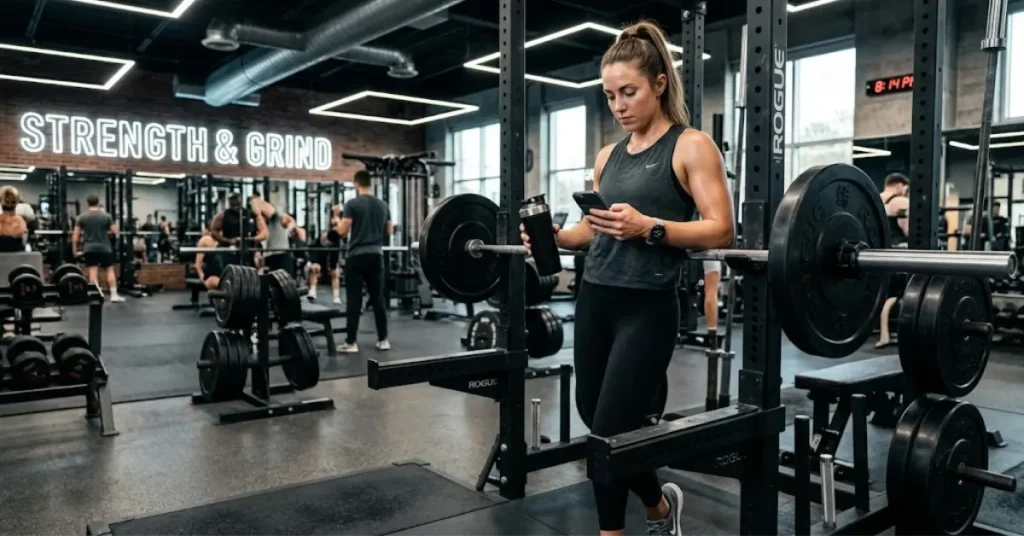
While fitness hardware and software streamline workout tracking, continuous digital exposure can cause mental fatigue. Maintaining long-term consistency requires setting healthy boundaries between biometric tracking and intuitive movement.
- Schedule Screen-Free Active Recovery: Dedicate at least one or two outdoor sessions per week—such as trail walks, outdoor cycling, or trail running—to training by perceived exertion (RPE) without checking live screens.
- Focus on Macro Trends Over Daily Fluctuations: Avoid obsessing over minute-by-minute sensor readings. Track weekly recovery averages and monthly strength gains rather than stressing over a single night of disrupted sleep data.
- Incorporate Dedicated Mindfulness Sessions: Use digital apps for non-screen guided breathwork, yoga nidra, or post-workout meditation to downregulate the central nervous system after intense lifting blocks.
Fitness technology has transformed training from a rigid schedule into an adaptable system. By combining biometric data, flexible home streaming, and dedicated in-gym lifting sessions, you can train around your lifestyle while tracking measurable progress. Adopting a hybrid model keeps your workouts sustainable, trackable, and consistent over the long term.